
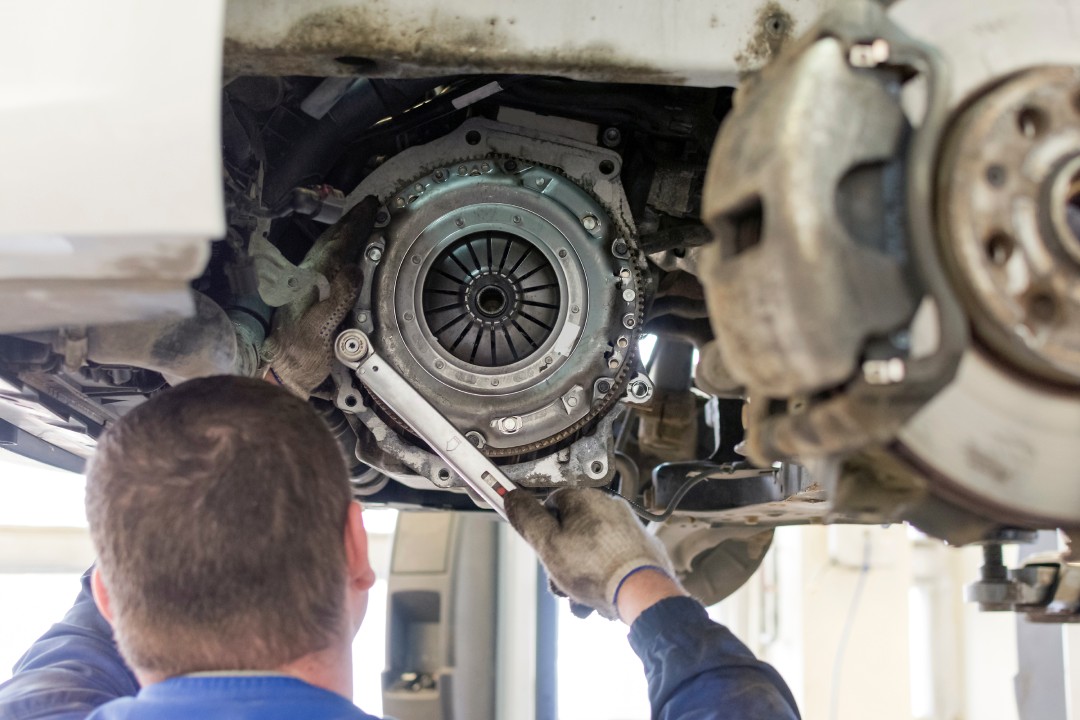
Few components in a manual transmission vehicle work harder than the clutch. It acts as the critical bridge between your engine and your wheels, facilitating every gear change and every stop-and-go moment. However, because it relies on friction to operate, it is a wear item that will eventually need replacement. Keep reading to learn of the many ways you can make your vehicle’s clutch last longer.
1. Avoid Riding the Clutch
One of the most common habits that destroys clutches is “riding the clutch.” This happens when you keep your foot resting on the clutch pedal while driving, even slightly. Although it might feel like you aren’t applying pressure, the weight of your foot can partially engage the release mechanism.
This causes the clutch plate to slip against the flywheel instead of locking fully, generating excessive heat and friction. To prevent this, make it a habit to remove your foot completely from the pedal as soon as you change gears. Use the dead pedal—the rubber pad to the left of the clutch—to rest your foot between shifts.
2. Master Proper Shifting Techniques
Smooth gear shifts are crucial to a clutch’s longevity. Aggressive or jerky shifting shocks the drivetrain and puts unnecessary stress on the clutch disc. Focus on coordinating your hand and foot movements so that you release the clutch pedal smoothly as you gently apply the throttle.
Always engage completely before accelerating. If you slam on the gas pedal while only halfway releasing the clutch, you force the friction material to slip under high torque, which rapidly accelerates wear. Patience and precision during gear changes will pay dividends in the long run.
3. Minimize Slipping the Clutch
Another way to make your vehicle’s clutch last longer is to only slip the clutch rarely. Slipping the clutch means holding the pedal at the bite point to control vehicle speed, typically during slow maneuvers or hill starts. While sometimes necessary, excessive slipping generates immense heat that can glaze the flywheel or burn out the friction material.
When starting on an incline, rely on your handbrake to hold the car rather than hovering at the bite point. Engage the handbrake, find the bite point, and release the brake only when you feel the car pulling forward. Similarly, when towing heavy loads, avoid inching forward in high gears.
4. Consider Selective Upgrades
For those who demand more from their vehicles, especially in performance or heavy-duty towing scenarios, stock components may not suffice. One opportunity to brace and protect your clutch is a flywheel surface lock. A flywheel surface lock helps by creating a more secure and precise connection between the flywheel and clutch assembly to minimize energy loss and optimize power transfer.
Conclusion
Protecting your clutch doesn’t require advanced mechanical knowledge, just a few adjustments to your daily driving style. By keeping your foot off the pedal, shifting smoothly, and minimizing slip, you preserve the integrity of your transmission and keep your vehicle running reliably for years. If you suspect your clutch is already slipping or if you hear grinding noises during gear changes, schedule an inspection with a technician today to catch small issues before they become major repairs.
